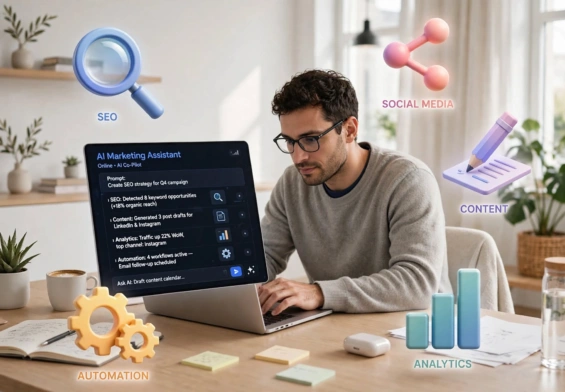
Running a small business often means juggling many different tasks at the same time. From managing customers and marketing to handling emails and daily operations, there is always something that needs your attention. The best AI tools for small business can make these tasks easier, save time, and help you stay organized. Whether you run a local store, agency, service business, or online company, AI can help you work more efficiently without adding unnecessary complexity.
Quick List of the Best AI Tools for Small Business
| AI Tool | Best For |
|---|---|
| ChatGPT | Writing, ideas, research and business tasks |
| Claude | Documents, analysis and detailed writing |
| Canva | Marketing graphics and social media |
| Grammarly | Professional business communication |
| Notion AI | Notes, planning and organization |
| Perplexity | Business research |
| HubSpot | CRM and marketing |
| Zapier | Business automation |
| Microsoft Copilot | Productivity and office work |
| QuickBooks | Accounting and financial management |
Why Should Small Businesses Use AI Tools?

Small businesses usually have fewer employees and limited resources compared with large companies.
That means business owners often have to handle several responsibilities themselves.
AI can take some of the work off your plate.
For example, instead of spending an hour writing five customer emails, you can use AI to create the first drafts and then personalize them. Instead of creating every social media post from scratch, you can generate ideas and captions in a few minutes.
AI can help with:
- Writing emails and documents
- Creating marketing content
- Customer service
- Data analysis
- Research
- Social media management
- Project organization
- Accounting tasks
- Workflow automation
The goal isn’t to replace people.
The goal is to help a small team accomplish more without constantly adding more work.
1. ChatGPT – A Great AI Tool for Small Businesses
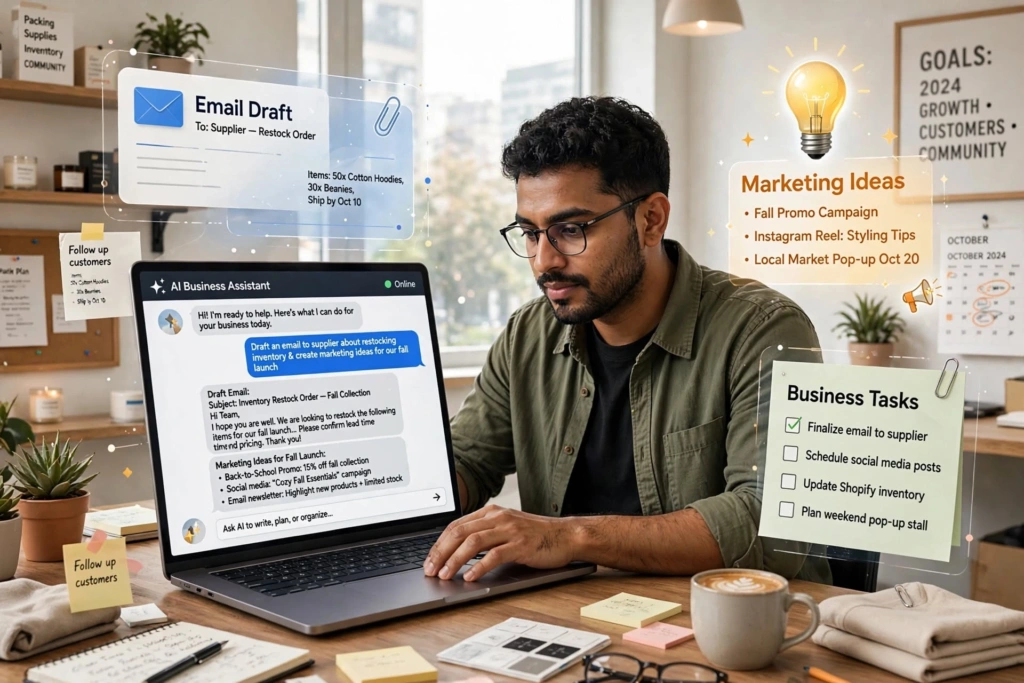
ChatGPT is a handy AI tool that can help small business owners handle many everyday tasks more quickly and easily.
You can use it for everyday tasks without needing technical knowledge.
For example, a business owner can use ChatGPT to:
- Write customer emails
- Create product descriptions
- Generate social media captions
- Brainstorm business ideas
- Create blog outlines
- Write job descriptions
- Summarize documents
- Create marketing ideas
- Prepare meeting agendas
- Explain complicated topics
Let’s say you own a local clothing store and want to promote a new collection.
Instead of staring at a blank screen, you can ask ChatGPT for ten promotional ideas, select the best ones, and then customize them for your customers.
Best for: Small business owners, marketers, retailers, agencies, consultants, and service businesses.
2. Claude – Great for Documents and Business Analysis
Claude is a useful option for small businesses that regularly work with long documents or detailed information.
You can use it to work with:
- Business reports
- Company documents
- Proposals
- Policies
- Research
- Long-form content
- Project information
For example, if you receive a lengthy proposal from a supplier, AI can help you summarize the important points and identify areas that deserve closer attention.
Best for: Consultants, agencies, managers, researchers, and businesses dealing with large documents.
3. Canva – Best AI Tool for Small Business Marketing

Good visual content is important for almost every modern business.
However, hiring a professional designer for every social media post or promotional graphic isn’t always practical for a small business.
Canva makes it easier to create professional-looking designs.
You can use it to create:
- Social media posts
- Flyers
- Presentations
- Posters
- Business cards
- Advertisements
- Menus
- YouTube thumbnails
- Infographics
Best for: Retailers, restaurants, salons, agencies, content creators, and local businesses.
4. Grammarly – Best for Business Writing
The way you write emails, proposals, website content, and customer messages can shape how people see your business.
Typos and unclear writing can make even a good business look less professional.
Grammarly can help improve writing by checking grammar, spelling, clarity, and tone.
You can use it when writing:
- Customer emails
- Business proposals
- Website content
- Social media posts
- Reports
- Internal communications
It is especially useful if you frequently communicate with customers or clients through written messages.
Best for: Almost every small business.
5. Notion AI – Best for Business Organization
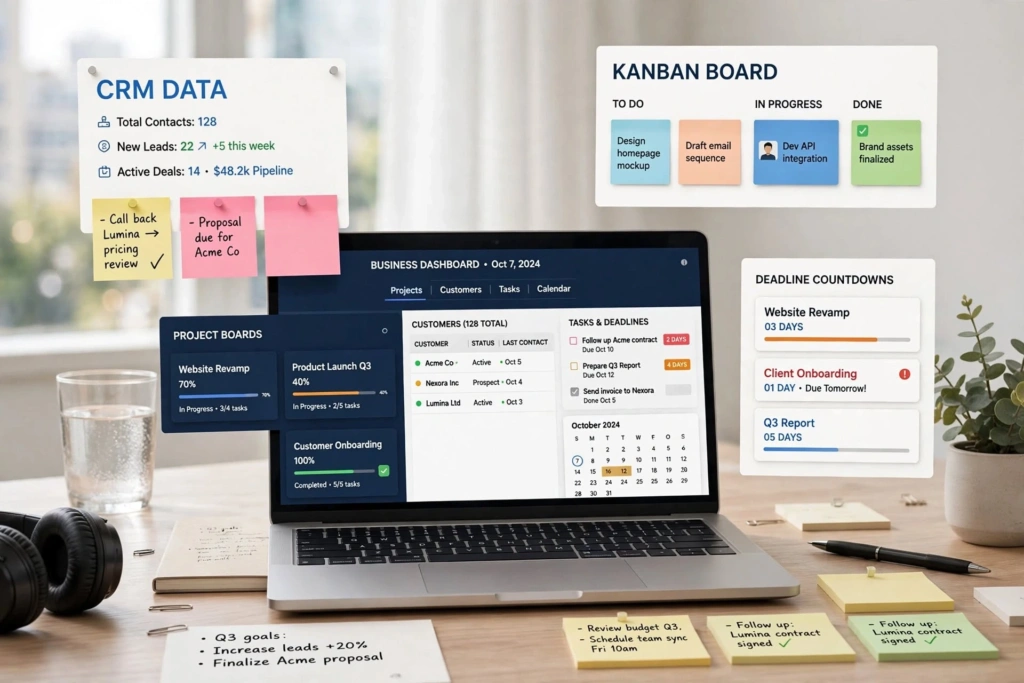
Small businesses can quickly become disorganized when information is spread across notebooks, spreadsheets, emails, and messaging apps.
Notion can give you one central place to organize your work.
You can create pages for:
- Business plans
- Customer information
- Project management
- Meeting notes
- Content calendars
- Employee tasks
- Company processes
Notion AI can help you summarize notes, create content, and organize information within your workspace.
Best for: Small teams, agencies, startups, consultants, and service businesses.
6. Perplexity – Best for Business Research
Before making a business decision, you often need to do research.
You might want to understand a new market, compare competitors, research a product, or learn about a particular industry.
Perplexity can help you find information and explore topics quickly.
For example, a small business owner planning to launch a new product could use it to research competitors, customer trends, and related topics.
However, don’t blindly trust AI-generated information. Important business decisions should always be based on verified sources.
Best for: Entrepreneurs, marketers, consultants, researchers, and business owners.
7. HubSpot – Best for Customer Management
As your business grows, remembering every customer interaction becomes difficult.
A CRM can help you organize customer information, sales activities, marketing, and communication.
HubSpot combines CRM capabilities with various AI-powered features that can assist businesses with tasks such as content creation, customer management, and sales workflows.
You can use it to manage:
- Leads
- Customer information
- Sales pipelines
- Marketing campaigns
- Customer communication
- Follow-ups
Best for: Small businesses that want to organize sales and customer relationships.
8. Zapier – Best for Business Automation
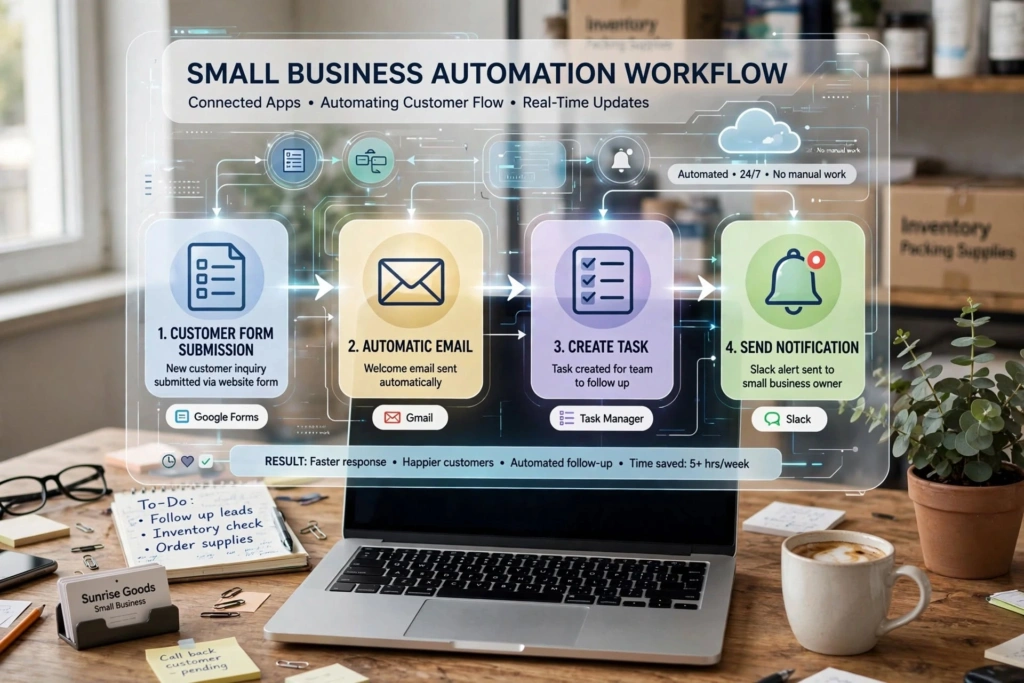
Repetitive administrative work can quietly consume hours every week.
Zapier helps connect different apps so that certain tasks happen automatically.
For example:
Customer fills out a form → information goes into a spreadsheet → your team gets an email notification → a follow-up task is created.
Instead of doing all these steps manually, automation can handle much of the process.
You can automate workflows involving:
- Emails
- Forms
- Spreadsheets
- CRM systems
- Project management
- Marketing
- Customer notifications
Best for: Businesses with repetitive workflows and small teams.
9. Microsoft Copilot – Best for Office Productivity
If your business already uses Microsoft products, Copilot can be useful for everyday productivity.
Depending on the Microsoft products and plan you’re using, AI features can assist with tasks involving documents, emails, spreadsheets, presentations, meetings, and other office work.
For example, you might use AI to summarize a long email thread or help create the initial version of a presentation.
Best for: Businesses that already rely heavily on Microsoft 365.
10. QuickBooks – Best for Small Business Accounting
Managing finances is one area where organization matters a lot.
Accounting software such as QuickBooks can help small businesses manage financial information, invoices, expenses, and other accounting-related tasks. Its AI-powered capabilities can assist with certain workflows and financial insights.
Instead of keeping everything in scattered spreadsheets, you can keep your financial information organized in one system.
Best for: Freelancers, retailers, service businesses, and small companies.
Important: AI can assist with financial tasks, but important tax, accounting, or compliance decisions should be reviewed by a qualified professional.
Best AI Tools for Different Small Businesses
Not every business needs the same AI tools.
Here’s a simple guide:
| Business Type | Useful AI Tools |
|---|---|
| Retail Store | ChatGPT, Canva, QuickBooks |
| Restaurant | ChatGPT, Canva, Grammarly |
| Digital Agency | ChatGPT, Notion AI, Canva, Zapier |
| Salon | ChatGPT, Canva, Notion AI |
| Freelancer | ChatGPT, Grammarly, Canva |
| E-commerce Business | ChatGPT, Canva, QuickBooks |
| Consulting Business | Claude, ChatGPT, Notion AI |
| Local Service Business | ChatGPT, Canva, HubSpot |
| Small Marketing Team | ChatGPT, Canva, HubSpot, Zapier |
How to Choose the Right AI Tools for Your Business
You don’t need to subscribe to every AI tool you see online.
Start by identifying the tasks that take up most of your time.
Identify Repetitive Tasks
Look at your daily routine.
Are you repeatedly:
- Answering similar emails?
- Creating social media posts?
- Entering customer information?
- Writing product descriptions?
- Preparing reports?
- Scheduling tasks?
These are good places to look for AI or automation.
Start With One or Two Tools
Trying ten tools at once can make things more complicated.
Choose one tool that solves your biggest problem.
Once you’re comfortable using it, add another tool if you actually need it.
Consider Your Budget
Small businesses need to watch expenses carefully.
Many AI services have free or lower-cost plans. Test the tool before committing to a long-term subscription.
Protect Business Information
Don’t put sensitive customer information, passwords, financial information, or confidential business data into an AI tool unless you understand how that service handles your data and have appropriate controls in place.
How Small Businesses Can Use AI Without Losing the Human Touch
AI can make business operations faster, but customers still want to feel like they’re dealing with real people.
A completely automated experience can sometimes feel cold or generic.
Use AI for the background work, but keep humans involved where relationships and judgment matter.
For example:
AI can help with:
- First drafts
- Brainstorming
- Summaries
- Repetitive tasks
- Data organization
- Research
People should handle:
- Important customer conversations
- Final decisions
- Business strategy
- Quality control
- Sensitive situations
- Relationship building
The combination of AI efficiency + human judgment can be much more valuable than relying entirely on either one.
Final Thoughts

The best AI tools for small business are the ones that solve real problems.
You don’t need a complicated AI system to get started. A small business could begin with ChatGPT for writing and brainstorming, Canva for marketing visuals, and an automation tool such as Zapier for repetitive workflows.
As your business grows, you can add specialized tools for customer management, accounting, research, project management, and other areas.
The key is simple: don’t use AI just because it’s popular. Use it when it saves time, improves your work, or helps your business serve customers better.
When used thoughtfully, AI can give small businesses something they often need most—more time to focus on customers, growth, and the work that really matters.
Frequently Asked Questions
What is the best AI tool for a small business?
ChatGPT is one of the most versatile choices because it can help with writing, brainstorming, research, customer communication, and many everyday business tasks.
How can AI help a small business?
AI can help with marketing, writing, research, customer support, administration, project management, automation, and data-related tasks.
Are AI tools expensive for small businesses?
Not always. Many AI tools offer free plans or affordable options. Start with tools that address your biggest business needs before paying for multiple subscriptions.
Can AI replace employees in a small business?
AI can automate certain repetitive tasks, but it doesn’t replace the need for human judgment, creativity, customer relationships, and business decision-making.
Should a small business use multiple AI tools?
It can, but there’s no need to start with many tools. Begin with one or two that solve specific problems and add others only when they provide clear value.